Plant-based milks have become a popular non-dairy alternative to cow’s milk. Whether it’s due to food allergies, dietary choices, environmental concerns, or taste preferences, more people are opting for plant-based milks than ever before, with New Zealanders almost tripling their spend on these milks between 2014 and 2019 (New Zealand Government, 2022).
With such a wide range of plant-based milks to choose from, how do you decide which one is right for you? This article looks at the types of plant-based milks available in New Zealand and how they compare to dairy milk in terms of nutrition and environmental impact.
What is in a plant-based milk?
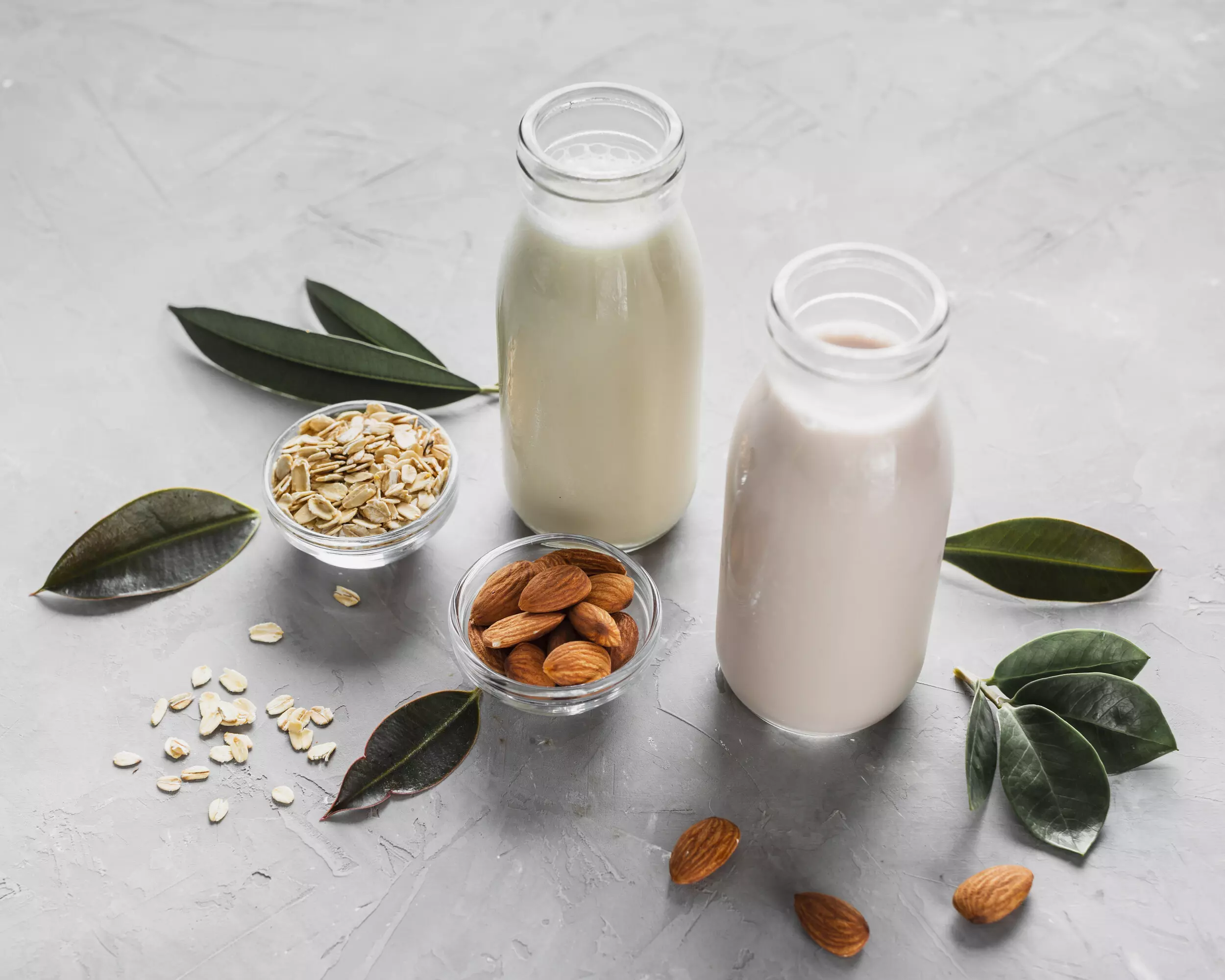
Plant-based milks are made by blending cereals, legumes or nuts together with water. Soy, oats, almonds, rice and coconut are most commonly used. They also contain other ingredients such as vegetable oils, emulsifiers, stabilisers, flavorings, and sugar.
The nutrition profile of plant-based milks varies depending on the type and brand of milk consumed. Overall, plant-based milks do not have the same nutrient content as dairy milk. They are naturally lower in protein and energy – the exception to this is soy milk, which contains a similar amount of protein and energy as dairy milk. Plant-based milks are also naturally lower in calcium, vitamin D and B vitamins (including vitamin B12). These nutrients are important for people following a veg~n (vegetarian or vegan) diet because they are typically obtained from consuming animal products.
Despite being naturally lower in some key nutrients, plant-based milks are often fortified with added vitamins and minerals to match the quantities found in dairy milk. Calcium, vitamin D and vitamin B12 may all be added to plant-based milks.
Plant-based milks are not suitable for babies aged under 12 months because they do not contain the nutrients needed for a baby’s growth and development. From one year of age, toddlers can have unflavoured soy milk that is fortified with calcium (Ministry of Health, 2021).
Pregnant and breastfeeding women following a strict veg~n diet are advised to ensure their plant-based milk is fortified with calcium and vitamin B12. Soy milk is recommended due to its higher energy and protein content (Ministry of Health, 2020).
On average, plant-based milks are more expensive than dairy milk. The cheapest plant-based options are available for soy, almond and rice milks.
The below table shows the typical amount of energy, protein and calcium found in dairy milk and popular plant-based milks in New Zealand.
Milk type | Energy kJ/100ml | Protein g/100ml | Calcium mg/100ml |
Homogenised cow’s milk | 263 | 3.3 | 120 |
Soy milk | 235-270 | 3.0-3.5 | 120-160* |
Almond milk | 65-160 | 0.4-0.7 | 75-120* |
Cashew milk | 70 | 0.4 | 120* |
Coconut milk** | 95-100 | 0.2 | 75-120* |
Rice milk | 210-230 | 0.3-0.7 | 110-120* |
Oat milk | 298 | 1.0 | 120 |
*fortified
**for drinking, not a cooking ingredient
Source: Adapted from (Te Hiringa Hauora Health Promotion Agency, 2022).
Plant-based milks in depth
Soy Milk
Soy milk is made from either ground soybeans or soy protein powder mixed with water. Soy milk is sometimes sweetened with added sugar. It has a slightly sweet, mild beany flavour and is suitable for drinking, cooking and baking. Soy milk has the highest protein content of all plant-based milks.
Soy products, including soy milk, have been associated with a number of health benefits, such as reduced risk of heart disease, breast cancer and prostate cancer. However, there have been historical concerns about the hormonal health effects of soy, especially for peri- and postmenopausal women. These concerns have since been dispelled, with recent studies showing no evidence of adverse health effects from consuming soy (Messina, 2016).
Oat Milk
Oat milk is made by blending oats with water. It has a slightly sweet and oaty flavour. Oat milk has a creamy consistency and is suitable for drinking, cooking and baking. Oat milk contains more fibre than other plant-based milks. It also contains a low amount of gluten.
Nut Milk
To make nut milk, nuts are soaked then blended with water. The most popular types of nut milk are almond and cashew, and each has its own flavour and nutrition profile. Some nut milks are sweetened. Nut milk tends to have a high water content and be lower in energy and protein than other plant-based milks. Nut milk is suitable for drinking, cooking and baking. It is appropriate for people who are allergic or intolerant to soy, lactose or dairy.
Coconut Milk
Coconut milk is made by blending coconut milk or cream with water. Note that this is different to tinned coconut milk commonly used in Asian or Pacific cooking, or in baking. Coconut milk has a thin texture and subtle coconut flavour and is suitable for drinking. Like nut milk, it is also low in protein.
Rice Milk
Rice milk is made from milled brown rice and water. It has a thin consistency and a mild sweet nutty flavour. Rice milk is allergen-free, making it a good choice for people who cannot eat nuts, dairy, lactose or soy. It is suitable for drinking or cooking.
Other Plant-Based Milks
Other plant-based milks available in New Zealand include hemp or pea milk. It is also possible to make your own plant-based milk using just a few ingredients and a blender. Homemade milk is a cheaper option but will lack the benefit of added vitamins and minerals.
Environmental considerations of plant-based milks
Many consumers choose plant-based milks because of concerns about environmental impacts of dairy production.
A large review of research has shown that plant-based milks have a lower overall negative impact on the environment compared to dairy milk (Carlsson Kanyama et al., 2021). Dairy milk production uses significantly more land and water than plant-based milk production, mainly due to resources needed to raise livestock. In addition, dairy milk production is estimated to emit three times the amount of greenhouse gases compared to plant-based milk production, primarily as a result of methane produced by cattle (Poore & Nemecek, 2018).
The exact environmental impact will vary by the type of crop grown. For instance, greenhouse gas emissions are reportedly lowest for almond milk (Berardy et al., 2022). Conversely, almond milk has received criticism over concerns about the quantity of water used to grow the almonds. Despite this, the amount of water used to produce almond milk is still far lower than that for dairy milk production.
Environmentally conscious consumers may also want to consider the source of ingredients and place of manufacture of their plant-based milk. For instance, most of the soy grown for soy milk comes from Australia, but some comes from further afield in China or Japan. Some oat milk manufacturers use New Zealand-grown oats, whereas others source their oats from Australia or Europe (Castles, 2022). Read the package label to see where the plant-based milk was made, though note that country of origin labelling is not mandatory and will not be available for all milks.
Consumers might also consider the packaging of their plant-based milk. Many plant-based milks are packaged using Tetra Pak cartons, which can only be recycled by taking them to dedicated drop-off points around New Zealand.
Recommendations and conclusion
- All plant-based milks vary in their flavour and nutrition. For many people, choice of milk will simply come down to taste. For dietary variety and optimal gut health, consider having a variety of plant-based milks. Nutritionally, soy milk tends to be superior to other plant-based milks due to its high protein content.
- Fortification is a key consideration for plant-based milks. This is especially important for toddlers, women who are pregnant or breastfeeding, and people who don’t consume dairy. Look for milks fortified with calcium (at least 120 mg/100ml). If you don’t eat any animal products, choose one that is also fortified with vitamin B12 and vitamin D.
- For information on what nutrients are important for vegetarians or vegans, see Are nutritional supplements needed on a veg~n diet, Vegetarian Living NZ, Issue 81. This article addresses the importance of protein, calcium, vitamin D and vitamin B12, and recommended intakes.
- Read the label for information on the nutrition content, added ingredients and country of origin (if stated). Any vitamins or minerals that have been added should be clearly stated. The label should also state any allergens that may be present, such as soy, gluten or specific types of nuts.
- If environmental impact is a priority for you, consider purchasing milks made from locally sourced ingredients and check https://www.saveboard.nz/drop-off-cartons for Tetra Pak drop-off locations nationwide. Alternatively, consider making your own plant- based milk. This is an economical and environmentally friendly option that involves the least amount of processing, though will lack the benefit of added vitamins and minerals.
By Catherine Lofthouse
Catherine Lofthouse is a passionate plant-based foodie who loves to explore all things related to veg~n living. She is also a registered
dietitian.
For more articles, become a NZVS Member to receive our quarterly magazine, Vegetarian Living NZ PLUS get exclusive discounts on Vegetarian Approved & Vegan Certified products.
References
- Berardy, A. J., Rubín-García, M., & Sabaté, J. (2022). A Scoping Review of the Environmental Impacts and Nutrient Composition of Plant-Based Milks. Advances in Nutrition, 13(6), 2559–2572. https://doi.org/10.1093/advanc...;
- Carlsson Kanyama, A., Hedin, B., & Katzeff, C. (2021). Differences in Environmental Impact between Plant-Based Alternatives to Dairy and Dairy Products: A Systematic Literature Review. Sustainability, 13(22). https://doi.org/10.3390/su1322...;
- Castles, B. (2022, April). Plant milks. Consumer NZ. https://www.consumer.org.nz/ar...;
- Messina, M. (2016). Soy and Health Update: Evaluation of the Clinical and Epidemiologic Literature. Nutrients, 8(12). https://doi.org/10.3390/nu8120...;
- Ministry of Health. (2020). Eating and Activity Guidelines for New Zealand Adults: Updated 2020. Ministry of Health. https://www.health.govt.nz/sys...;
- Ministry of Health. (2021). Healthy Eating Guidelines for New Zealand Babies and Toddlers (0-2 years old). Ministry of Health. https://www.health.govt.nz/pub...;
- New Zealand Government. (2022, July). Southland oat milk producer gets Govt boost | Beehive.govt.nz. Beehive.Govt.Nz. https://www.beehive.govt.nz/re...;
- Poore, J., & Nemecek, T. (2018). Reducing food’s environmental impacts through producers and consumers. In Science (Vol. 360, Issue 6392, pp. 987–992).
- Te Hiringa Hauora Health Promotion Agency. (2022, May). Behind the hype: Plant-based milk alternatives. HealthEd. https://healthed.govt.nz/produ...;